
Blog

  • Bank Deposit Loan Qualification Factors Explained

    Bank Deposit Loan Qualification Factors Explained

    Bank deposit loan qualification factors are the measurable criteria lenders use to assess your eligibility, including credit score, income verified through bank deposits, debt-to-income ratio, and down payment amount. These factors apply directly to bank statement loans, the industry term for mortgage products that use 12–24 months of deposit history instead of tax returns to establish qualifying income. If you are self-employed, a freelancer, or earn income that does not show up cleanly on a W-2, understanding each of these factors gives you a real advantage before you apply.

    1. What role does your credit score play in bank deposit loan qualification?

    Credit score is the first filter lenders apply before reviewing anything else. Lenders typically require a minimum score of 620 for bank statement loan approval, with scores above 700 unlocking better interest rates and higher loan-to-value ratios. A higher score signals lower default risk, which directly translates to more favorable loan terms.

    Your score is not the only credit factor in play. Payment history and credit utilization also influence approval decisions, even when your score sits in an acceptable range. A borrower with a 650 score and a clean payment history often qualifies more easily than one with a 670 score and several recent late payments.

    • Minimum threshold: 620 for most bank statement loan programs
    • Best pricing tier: 700 and above
    • Key history factors: On-time payments, credit utilization below 30%, no recent collections
    • What to avoid before applying: Opening new credit accounts, missing payments, or carrying high balances

    Pro Tip: Pull your credit report at least 90 days before applying. That gives you enough time to dispute errors and pay down revolving balances, both of which can move your score meaningfully.

    2. How do banks analyze your bank deposits to verify income?

    Woman checking credit report on laptop at home office

    Lenders calculate qualifying income by averaging your total eligible deposits across 12–24 months of bank statements, then applying an expense ratio to account for business costs. This process replaces the tax return review used in conventional lending. The 12-month bank statement method is the most common starting point, though 24 months of data produces a more stable income picture.

    Not every deposit counts. Lenders include business revenue, client payments, accounts receivable collections, contract income, royalties, and licensing payments. They exclude transfers between accounts you own, loan proceeds, tax refunds, gifts, and one-time settlements. Mixing personal and business accounts without clear separation is one of the fastest ways to reduce your qualifying income.

    1. Collect 12–24 months of business bank statements from a single consistent account.
    2. Total all eligible deposits and exclude transfers, refunds, and non-income items.
    3. Divide by the number of months to get your average monthly gross deposit.
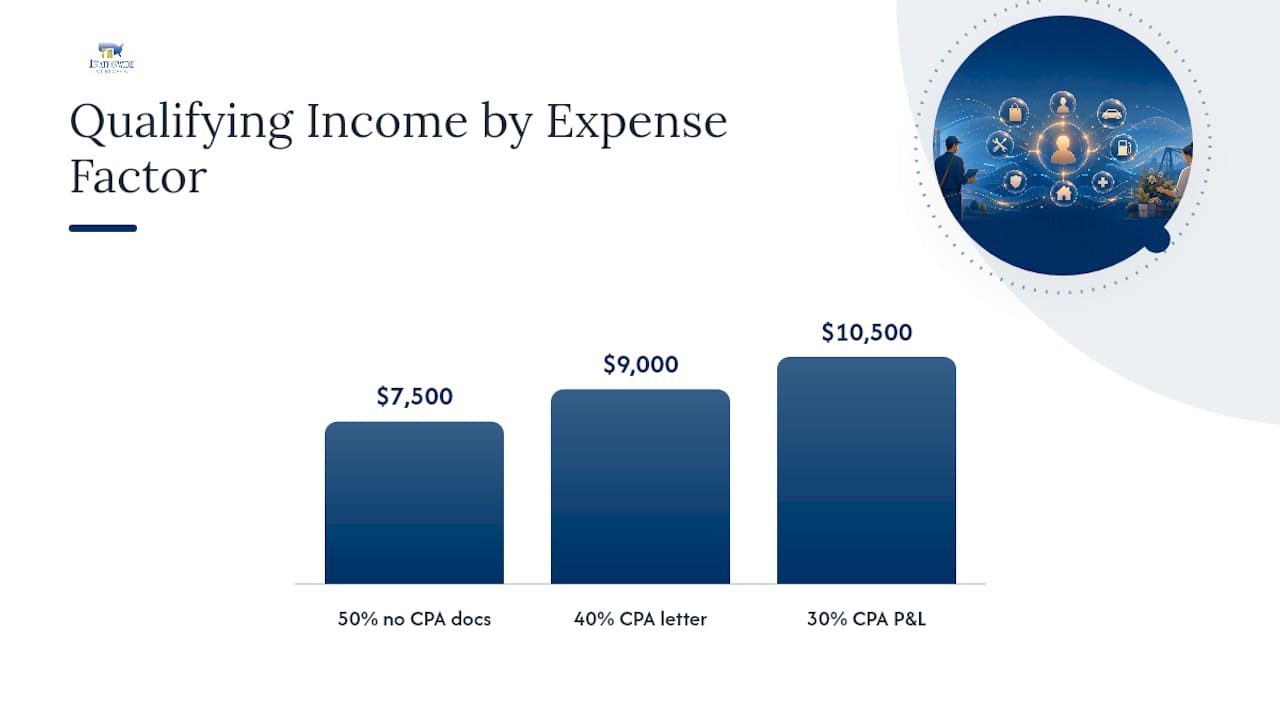
    4. Apply the expense ratio (typically 50% for business accounts) to arrive at qualifying income.
    5. Submit a CPA-certified profit and loss statement to potentially reduce the expense ratio to 35–40%.

    The expense ratio is the single variable that most borrowers underestimate. A $20,000 average monthly deposit at a 50% expense ratio produces $10,000 in qualifying income. The same deposit with a CPA-certified P&L at 40% produces $12,000. That $2,000 difference can change your maximum loan amount significantly.

    3. Why debt-to-income ratio matters in loan qualification

    Debt-to-income ratio, or DTI, measures your total monthly debt payments divided by your qualifying monthly income. Most lenders cap DTI between 36% and 43% for bank statement loan programs. Exceeding that ceiling typically results in a denial or a requirement to pay down existing debt before reapplying.

    DTI breaks into two components. The front-end ratio covers only your proposed housing payment, including principal, interest, taxes, and insurance. The back-end ratio adds all other monthly obligations, such as car loans, student loans, and credit card minimums. Lenders prefer a back-end DTI below 36%, though some programs allow up to 43% with compensating factors like strong reserves or a larger down payment.

    • Front-end ratio: Housing costs divided by gross qualifying income
    • Back-end ratio: All monthly debts divided by gross qualifying income
    • Preferred maximum: 36% back-end DTI
    • Program maximum: 43% back-end DTI for most bank statement loans
    • Fastest way to lower DTI: Pay off installment loans or reduce credit card balances before applying

    A high DTI does not always mean rejection. Lenders weigh DTI alongside credit score, down payment, and reserves. A borrower with a 42% DTI and 20% down plus six months of reserves presents a very different risk profile than one with the same DTI and no savings.

    4. How down payment size and asset verification influence qualification

    Down payment requirements for bank statement loans range from 10% to 25% depending on the loan amount, credit score, and lender guidelines. A larger down payment reduces the lender’s exposure and often results in a lower interest rate and fewer documentation requirements. Putting 20% down, for example, typically eliminates private mortgage insurance and signals financial stability.

    Down Payment Typical LTV Risk Level for Lender Common Outcome
    10% 90% Higher Requires strong credit and reserves
    15% 85% Moderate Broader program access
    20% 80% Lower Best pricing, no PMI
    25%+ 75% Lowest Maximum flexibility on other factors

    Asset verification goes beyond the down payment itself. Verified savings and cash reserves give lenders confidence that you can cover payments if income dips temporarily. Most programs require two to six months of reserves after closing, held in a verifiable account.

    Pro Tip: Keep your down payment funds in one account for at least 60 days before applying. Large deposits that appear suddenly require a paper trail, and unexplained transfers can delay or derail your approval.

    5. What unique factors apply to self-employed borrowers for bank statement loans?

    Self-employed borrowers face a specific set of loan eligibility criteria that conventional programs were not built to handle. Bank statement loans require 12–24 months of consistent deposits, a minimum of two years of self-employment history, and no W-2s or tax returns as income proof. The deposit record itself becomes the income document.

    The expense ratio is the most critical variable in this process. Industry experts confirm that a CPA-certified profit and loss statement can reduce the standard 50% expense ratio down to 35–40%, which directly increases qualifying income without changing a single deposit. That adjustment alone can make the difference between qualifying and not qualifying for a target loan amount.

    • Qualifying deposit types: Business revenue, contract payments, royalties, licensing fees, accounts receivable
    • Excluded deposit types: Owner transfers, personal gifts, loan proceeds, tax refunds
    • Documentation that helps: CPA-certified P&L, business license, two years of self-employment history
    • Account separation: Business and personal accounts should be kept separate to simplify income calculation

    If you write off significant business expenses on your taxes, your reported net income will likely be too low for a conventional loan. Bank statement loans solve this by looking at what actually flows into your accounts, not what survives after deductions.

    Self-employed borrowers who cannot document income through traditional channels also have access to no-income-verification programs. These are worth exploring if your deposit history is inconsistent or if you operate through multiple entities.

    6. How loan-to-value ratio affects your bank loan assessment

    Loan-to-value ratio, or LTV, compares the loan amount to the appraised property value. A lower LTV means you are borrowing less relative to what the property is worth, which reduces lender risk. Bank statement loan programs generally allow LTVs up to 90% for well-qualified borrowers, but the best terms come at 80% LTV or below.

    LTV connects directly to your down payment. A 20% down payment produces an 80% LTV. A 10% down payment produces a 90% LTV. Lenders use LTV alongside credit score and DTI to build a complete risk picture. A borrower with a moderate credit score can sometimes offset that weakness with a lower LTV, giving the lender more collateral protection.

    Property type also affects acceptable LTV. Primary residences typically qualify for higher LTVs than investment properties or second homes. If you are financing an investment property, expect lower maximum LTVs and stricter bank deposit requirements across the board.

    7. Why employment history and income consistency matter

    Two years of consistent self-employment history is a standard bank loan prerequisite. Lenders want to see that your income is not a one-time event. A borrower who started a business six months ago and shows large deposits may not qualify, even if the deposit totals look strong.

    Income consistency across the statement period matters as much as the total. Lenders look for steady or growing deposits month over month. A pattern of large deposits followed by months of near-zero activity raises questions about income reliability. If your business is seasonal, be prepared to explain the pattern and provide context through a CPA letter or business documentation.

    The two-year self-employment standard also applies to the business structure itself. Switching from a sole proprietorship to an LLC mid-statement period can complicate the income analysis. Keeping your business structure stable during the qualification window simplifies the review process.

    Key Takeaways

    Bank deposit loan qualification depends on five core factors: credit score, verified deposit income, DTI ratio, down payment size, and employment consistency. Each factor carries weight independently, but lenders assess them together to build a full risk profile.

    Point Details
    Credit score floor A minimum 620 score is required; scores above 700 unlock better rates and higher LTV options.
    Deposit income calculation Lenders average 12–24 months of eligible deposits and apply an expense ratio to derive qualifying income.
    DTI ratio ceiling Most bank statement loan programs cap back-end DTI at 43%, with 36% preferred for best terms.
    Down payment range Expect 10–25% down; 20% or more reduces lender risk and improves pricing.
    CPA letter impact A certified P&L can reduce the expense ratio from 50% to 35–40%, directly increasing qualifying income.

    What I have learned after years of working with self-employed borrowers

    Working with self-employed borrowers every day has taught me one consistent lesson: the biggest obstacle is not income. It is documentation. Borrowers often have strong cash flow but have never organized their deposits in a way that a lender can read clearly. They mix personal and business accounts, accept payments through multiple channels, and then wonder why their qualifying income looks low.

    The expense ratio conversation is where most borrowers are surprised. A standard 50% expense ratio cuts your qualifying income in half before the lender looks at anything else. Getting a CPA to certify your actual expense ratio is one of the highest-return steps you can take before applying. It costs a few hundred dollars and can add tens of thousands to your qualifying loan amount.

    Credit is the other area where preparation pays off. I have seen borrowers lose a full rate tier because they opened a new credit card two months before applying. Small decisions made without context can cost real money. Work with a mortgage professional before you start the process, not after you have already made moves that affect your file.

    The borrowers who qualify most smoothly are the ones who treat their bank accounts like a lender will read them. Clean deposits, consistent history, and a well-documented expense ratio make every other factor easier to manage.

    — Chris Arco, NMLS #1281

    Bank statement loan programs at 1st Nationwide Mortgage

    Self-employed borrowers who qualify through deposit history have real options. 1st Nationwide Mortgage is a direct mortgage banker, not a broker, licensed in 18 states and rated A+ by the BBB.

    https://1stnwm.com

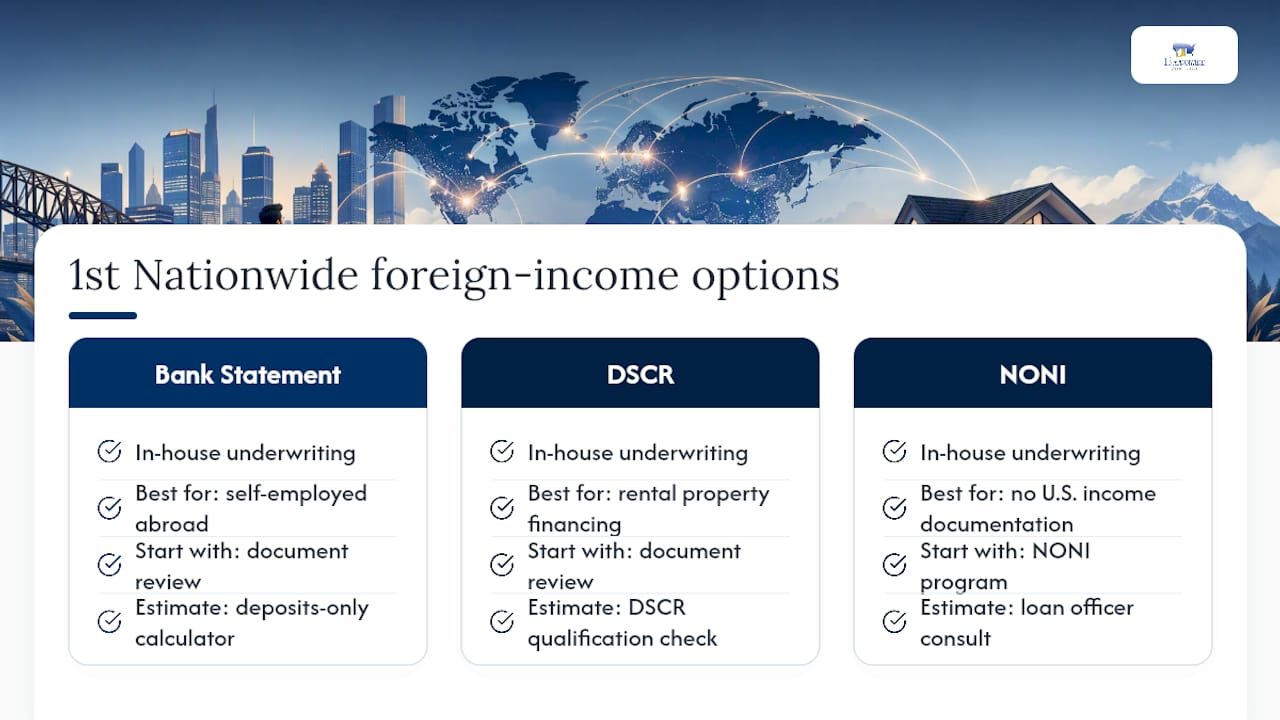
    The bank statement loan programs at 1st Nationwide Mortgage are built specifically for borrowers who cannot use tax returns to prove income. You can use the bank statement income calculator to estimate your qualifying income before you speak with anyone. If your situation involves no documentable income at all, the no-income-verification mortgage program may be the right fit. Contact 1st Nationwide Mortgage directly to review your deposit history and find out which program matches your profile.

    FAQ

    What is the minimum credit score for a bank statement loan?

    Most bank statement loan programs require a minimum credit score of 620. Scores above 700 typically qualify for better interest rates and higher loan-to-value ratios.

    How many months of bank statements do lenders require?

    Lenders generally require 12–24 months of bank statements. A longer statement history produces a more stable income average and can strengthen your application.

    What deposits do lenders exclude from income calculations?

    Lenders exclude transfers between accounts you own, loan proceeds, tax refunds, gifts, and one-time settlements. Only consistent business revenue and client payments count toward qualifying income.

    How does the expense ratio affect my qualifying income?

    The expense ratio deducts estimated business costs from your gross deposits. A standard 50% ratio cuts qualifying income in half, but a CPA-certified profit and loss statement can reduce it to 35–40%, increasing your qualifying income without changing your deposits.

    What is the maximum DTI for a bank statement loan?

    Most bank statement loan programs allow a maximum back-end debt-to-income ratio of 43%. Lenders prefer 36% or below, and borrowers near the ceiling may need stronger reserves or a larger down payment to compensate.

  • Variable Income Mortgage Qualification Tips for 2026

    Variable Income Mortgage Qualification Tips for 2026

    Variable income mortgage qualification is defined as the process of demonstrating consistent, verifiable earnings to a lender when your pay fluctuates month to month. Fannie Mae and Freddie Mac both require a minimum 12-month income history for variable income sources, and two years is the stronger standard. Freelancers, 1099 contractors, self-employed professionals, and real estate investors all face this same documentation challenge. The good news: lenders care more about income patterns than income perfection. Follow the right steps, and a fluctuating income does not disqualify you.

    What documentation do lenders require for variable income borrowers?

    Lenders build their case for your qualification on documents, not promises. Fannie Mae and Freddie Mac set the baseline: 12+ months of income history is the minimum, but 24 months gives underwriters a cleaner picture of your earning pattern. The more consistent your records, the less explaining you have to do.

    The core documents lenders request include:

    • Tax returns (1040s): Two years of federal returns show gross income, deductions, and business activity. Self-employed borrowers must include all schedules.
    • Bank statements: Typically 12–24 months of personal and business statements. These verify actual deposits, not just reported income.
    • Verification of employment (VOE): A written confirmation from your employer or CPA that your income is likely to continue.
    • Pay stubs or 1099 forms: Recent stubs confirm current pay rates. 1099s document contractor income across clients.
    • Profit and loss (P&L) statements: Required for self-employed borrowers to show current business performance.

    Employment gaps matter. Gaps over one month in the past 12 months signal instability to underwriters. If you changed jobs or had a slow season, document the reason and show that income resumed at a predictable level.

    Pro Tip: Every document you submit tells a story. Make sure your tax returns, bank statements, and VOE all tell the same story. Contradictions between documents are the single fastest way to trigger an underwriting delay.

    How do lenders calculate variable income for mortgage qualification?

    Lenders do not simply add up your last 12 months of deposits and divide by 12. Fannie Mae requires that income averaging methods depend on the income trend and the length of documented history. The direction your income is moving matters as much as the total.

    Hands pointing at mortgage income calculation worksheet

    Income trend How lenders calculate it What you need
    Stable or increasing Average of year-to-date plus prior year 12–24 months of documentation
    Decreasing Must be proven stabilized Documentation of why it dropped and evidence it leveled off
    Seasonal or contract-based Averaged over full cycle Full 12-month history showing predictable pattern

    For stable or increasing income, lenders add your year-to-date earnings to your prior year total, then divide by the number of months covered. That average becomes your qualifying monthly income. A graphic designer earning $72,000 in year one and $84,000 year-to-date through June of year two would have their income averaged across those months, not just the most recent quarter.

    Infographic illustrating mortgage qualification steps

    Decreasing income follows a stricter rule. Declining income must be proven stabilized before it counts. If your income dropped from $10,000 per month to $7,000 per month due to a contract change, you must document the reason and show that $7,000 is now the consistent new baseline. Lenders will qualify you at the lower level, not the average of both.

    Payment frequency also affects the calculation. Fannie Mae’s policy requires lenders to consider payment frequency and income trends when averaging variable income. A borrower paid weekly needs a different divisor than one paid quarterly. Two borrowers with identical annual totals can produce different qualifying incomes if their payment patterns differ.

    Pro Tip: If your income has been declining, treat the stabilization process as a documentation project. Write a clear letter explaining the cause, attach supporting contracts or client agreements, and show three to six months of consistent deposits at the new level before you apply.

    What are the best practices for variable income borrowers?

    The strongest variable income mortgage applications share four qualities: clean documentation, consistent narratives, strong credit, and adequate reserves. These are the levers you control before you ever speak to an underwriter.

    • Keep two years of organized records. Store tax returns, bank statements, and 1099s in one place. Gaps in your paper trail force lenders to make assumptions, and they rarely assume in your favor.
    • Prioritize your credit score. Self-employed mortgage underwriting is fundamentally risk management. A credit score above 720 signals to lenders that you manage financial obligations reliably, which offsets the uncertainty of variable income.
    • Manage your debt-to-income (DTI) ratio. Pay down revolving debt before applying. A lower DTI gives lenders more confidence that your variable income can cover your obligations even in a slow month.
    • Build liquid reserves. Lenders want to see that you can cover several months of mortgage payments from savings. Reserves act as a buffer that makes variable income feel less risky to an underwriter.
    • Consider alternative loan programs. If your tax returns understate your actual income due to deductions, a bank statement mortgage may qualify you based on actual deposits rather than adjusted gross income.

    Frequent job changes do not automatically disqualify you. Predictable earning patterns matter more than employer continuity. A consultant who has worked with five clients over two years but maintained steady monthly deposits has a stronger case than a salaried employee with a six-month gap.

    How do self-employed borrowers and real estate investors qualify?

    Variable income borrowers are not a single group. Self-employed professionals, 1099 contractors, and real estate investors each face distinct documentation challenges and have access to different loan programs.

    Self-employed borrowers

    Self-employed borrowers qualify by showing consistent income with tax returns and bank statements, typically over two years. The challenge is that Schedule C deductions reduce taxable income, which can make your qualifying income look smaller than your actual cash flow. A business owner earning $150,000 in gross revenue but claiming $60,000 in deductions qualifies on $90,000, not $150,000.

    Bank statement loans solve this problem directly. Lenders using 12-month bank statement programs calculate income from actual deposits, bypassing the tax return entirely. This approach works best for borrowers with high gross revenue and legitimate but aggressive deductions.

    1099 contractors and freelancers

    1099 contractors qualify using their 1099 forms, tax returns, and bank statements. 1099 mortgage loans are specifically designed for this group, using gross 1099 income rather than net income after deductions. Freelancers with multiple clients benefit from showing consistent total deposits across clients rather than relying on any single income source.

    Real estate investors

    Real estate investors face a different problem. Rental income is variable by nature, and conventional lenders often cap the number of financed properties. DSCR loans bypass personal income documentation entirely.

    Loan type Income method Best for
    Conventional Tax returns, W-2s, 24-month history Salaried borrowers with simple income
    Bank statement loan 12–24 months of deposits Self-employed with high deductions
    DSCR loan Property cash flow vs. debt payment Real estate investors
    1099 mortgage Gross 1099 income Contractors and freelancers

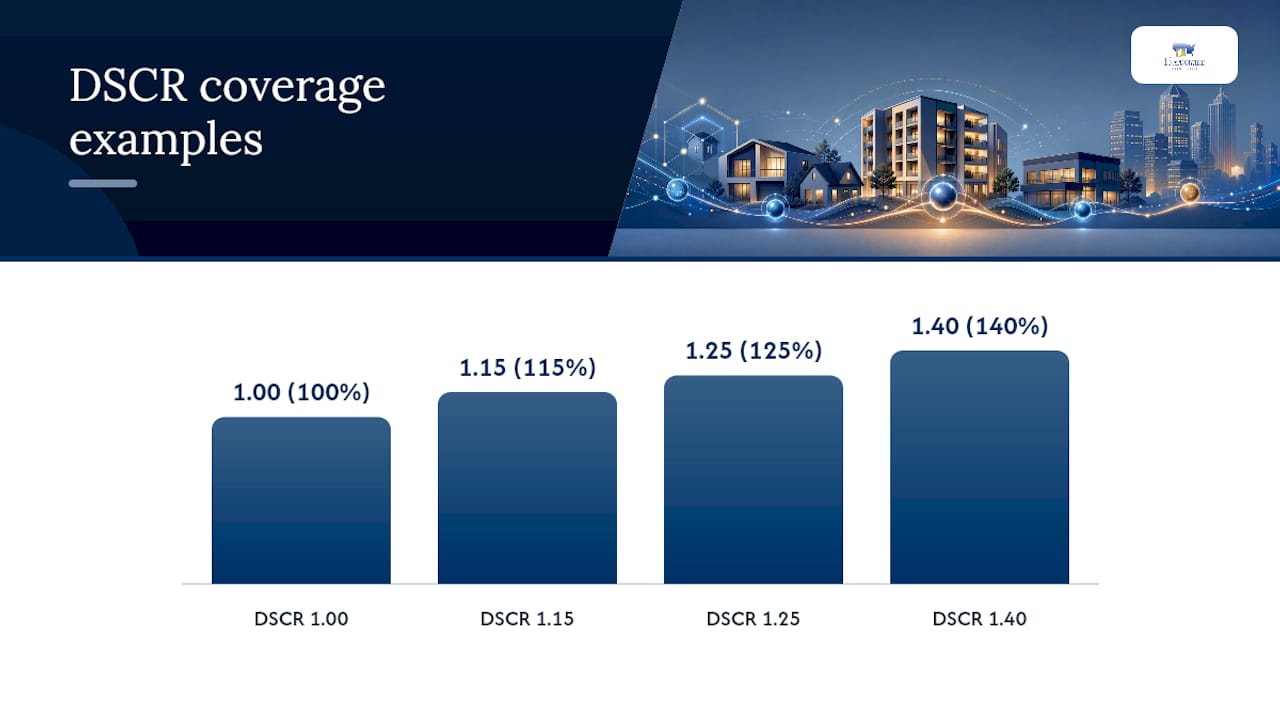
    DSCR loans qualify investors based on whether the property’s rental income covers its debt service, not on the borrower’s personal income. A rental property generating $2,500 per month against a $2,000 mortgage payment has a DSCR of 1.25, which meets most lender thresholds. Investors can use this structure to expand their portfolios without conventional limits on financed properties.

    Key takeaways

    Variable income borrowers qualify for mortgages by documenting consistent income patterns, managing credit and DTI, and choosing the right loan program for their income type.

    Point Details
    Minimum income history Fannie Mae requires at least 12 months; 24 months produces a stronger application.
    Income trend determines method Stable or increasing income is averaged; declining income must be proven stabilized first.
    Documentation consistency Tax returns, bank statements, and VOE must all tell the same income story.
    Credit and reserves matter Strong credit and liquid savings offset the risk lenders associate with variable income.
    Alternative programs exist Bank statement loans and DSCR loans qualify borrowers who cannot use standard tax return documentation.

    What I’ve learned from watching variable income applications fail

    The most common reason variable income borrowers get denied is not that their income is too low. It is that their documents contradict each other. I have seen applications where the tax return showed $80,000 in net income, the bank statements showed $140,000 in deposits, and the borrower had no explanation ready. Underwriters do not fill in the blanks for you. They deny the file and move on.

    The second mistake is treating declining income as a problem to hide. Borrowers who experienced a slow year often try to bury it in the averages or submit only the stronger year. Lenders see through this. The better move is to document the decline clearly, explain the cause, and show stabilization at the new level. A well-documented lower income beats an unexplained higher one every time.

    The third mistake is applying too early. Borrowers who just started freelancing or recently went self-employed often push to buy before they have 12 months of clean records. Waiting six more months to build a cleaner income history can mean the difference between approval and denial, or between qualifying for the home you want and settling for less.

    The insight that most borrowers miss: recent income patterns matter more than total income history. A borrower with 18 months of clean, consistent deposits is often in a better position than one with four years of erratic records. Focus your documentation on the last 12–24 months, make it spotless, and let the trend speak for itself.

    — Christopher

    How 1stnwm helps variable income borrowers get qualified

    Variable income borrowers often have strong cash flow that conventional lenders simply cannot see through a tax return. 1stnwm specializes in exactly this gap.

    https://1stnwm.com

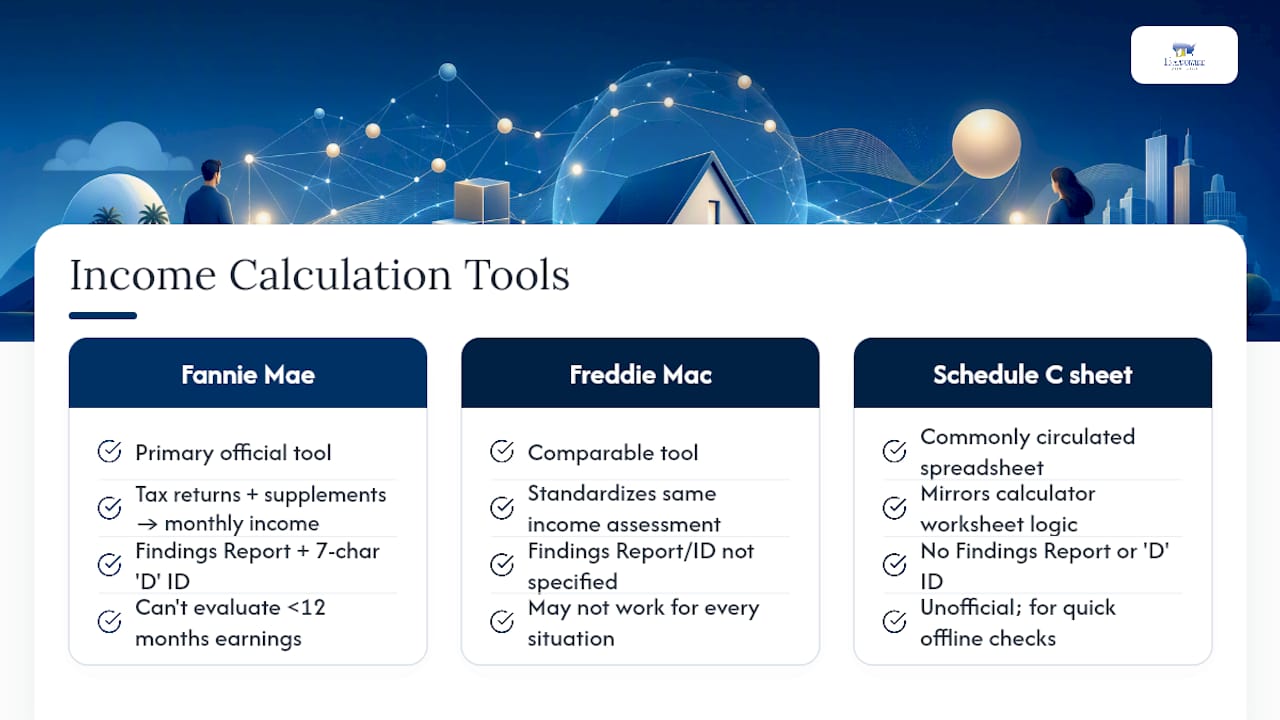
    1stnwm’s bank statement loan programs qualify self-employed borrowers and freelancers using 12–24 months of actual deposits, with no tax returns required. For real estate investors, DSCR loans use property cash flow to determine eligibility, removing personal income from the equation entirely. Use the bank statement income calculator to see what you may qualify for before you apply. If your income is real and your deposits are consistent, 1stnwm has a program built for your profile.

    FAQ

    What is the minimum income history for variable income mortgage qualification?

    Fannie Mae allows qualification with as little as 12 months of income history when positive offsetting factors are present. Two years of documented history remains the standard that produces the strongest application.

    Can I qualify for a mortgage if my income has been declining?

    Yes, but declining income must be proven stabilized before it counts toward qualification. You need documentation showing the cause of the decline and consistent deposits at the new, lower level.

    How do self-employed borrowers qualify without W-2s?

    Self-employed borrowers qualify using two years of tax returns, bank statements, and a CPA-prepared P&L statement. Bank statement loans offer an alternative path for borrowers whose tax returns understate actual cash flow.

    What is a DSCR loan and who is it for?

    A DSCR loan qualifies real estate investors based on a property’s rental income relative to its debt payment, not the borrower’s personal income. It is the primary tool for investors who want to expand a portfolio without conventional income documentation requirements.

    Do employment gaps disqualify variable income borrowers?

    Gaps over one month in the past 12 months require explanation and evidence that income has resumed. Gaps do not automatically disqualify you, but they must be addressed directly in your application with supporting documentation.

    Article generated by BabyLoveGrowth

  • How Lenders Handle Business Debt in Underwriting

    How Lenders Handle Business Debt in Underwriting

    Business debt underwriting is the process lenders use to measure whether your total debt obligations fit inside your income and cash flow before approving a loan. Two metrics drive every decision: the debt-to-income ratio (DTI) and the debt service coverage ratio (DSCR). Understanding how lenders handle business debt in underwriting gives you a direct advantage when preparing your financials, choosing the right loan type, and avoiding the mistakes that trigger denials. Whether you are applying through a conventional mortgage lender, the SBA, or a specialized program, the same core logic applies: lenders treat debt as a stream of required payments, and they stress-test whether your cash flow can absorb them.

    How do lenders calculate DTI for business owners?

    DTI is total monthly debt payments divided by gross monthly income. Lenders split it into two versions: front-end DTI covers only housing costs, and back-end DTI covers every recurring obligation. For business owners, back-end DTI is the number that matters most, because it pulls in business loan payments, equipment leases, lines of credit, and any personal installment debts.

    Fannie Mae guidelines include installment debts and mortgage debts extending beyond 10 months in the DTI calculation. Manually underwritten loans carry a maximum DTI of 36%, extendable to 45% with strong credit reserves, and Desktop Underwriter loans allow up to 50%. That 50% ceiling is not just a policy number.

    Analysis of over 30 million mortgage applications reveals a practical denial cliff at approximately 50% DTI, where crossing this threshold raises denial rates by about 15–17 percentage points. That jump means a borrower at 49% DTI and a borrower at 51% DTI are in entirely different risk categories in the eyes of a lender.

    Business owners face a specific challenge here. Tax deductions that reduce taxable income also reduce the gross income figure lenders use to calculate DTI. A business generating strong cash flow can look underpowered on paper, which is why programs like Bank Statement Loans exist to capture actual deposits rather than tax-return income.

    Key DTI thresholds to know:

    • 36%: Standard ceiling for manually underwritten conventional loans
    • 45%: Extended limit with compensating factors like strong reserves
    • 50%: Hard ceiling for Fannie Mae Desktop Underwriter loans and the real-world denial cliff
    • 43%: The qualified mortgage (QM) benchmark under federal ability-to-repay rules

    Pro Tip: Keep your back-end DTI at least 5 percentage points below the lender’s stated maximum. That buffer protects you if a new debt surfaces or income is recalculated during closing.

    How does DSCR factor into the business debt underwriting process?

    DSCR measures whether a business generates enough operating income to cover its debt payments. The formula is operating cash flow (EBITDA) divided by total debt service, where total debt service includes every required principal and interest payment across all business debts. A DSCR of 1.0 means income exactly covers payments. Anything below 1.0 means the business runs a deficit on debt service.

    Infographic illustrating business debt underwriting steps with key factors

    The SBA 7(a) loan program sets a minimum DSCR of 1.1 for small loans under $350,000. That 1.1 threshold means operating income must exceed total debt service by at least 10%. The SBA’s approach explicitly integrates all business debts, including the new loan being applied for, so adding a new obligation directly lowers DSCR.

    Lenders use DSCR to determine not just approval or denial, but also loan size and terms. A borrower with a DSCR of 1.4 will typically qualify for a larger loan at a better rate than a borrower at 1.15, even if both clear the minimum threshold. DSCR is a stress test, not a checkbox.

    For real estate investors, DSCR takes on a different form. Instead of business EBITDA, lenders use the property’s net rental income divided by the mortgage payment. A DSCR loan calculator lets you run this math before you apply, so you know exactly where you stand.

    What lenders include in total debt service for DSCR:

    • All existing business term loans (principal and interest)
    • Lines of credit with outstanding balances
    • Equipment financing and capital leases
    • The proposed new loan payment
    • Any personal guarantees on business debt that cross into personal liability

    Pro Tip: If your DSCR sits between 1.1 and 1.25, ask your lender whether extending the loan term reduces the monthly payment enough to push your ratio above 1.3. A longer term costs more in total interest, but it can be the difference between approval and denial.

    What factors influence lenders’ assessment of business debt beyond ratios?

    DTI and DSCR are the headline numbers, but business term loan underwriters weigh several additional factors when building a complete risk profile. Cash flow coverage takes priority over credit score alone, which surprises many business owners who assume a strong personal credit score compensates for tight debt ratios.

    The composition of your debt matters as much as the total amount. Secured debt backed by real assets carries less risk than unsecured debt. Short-term debt with balloon payments due within 12 months signals near-term cash pressure. A business with $500,000 in long-term, fixed-rate debt is a fundamentally different risk than a business with $500,000 in revolving credit lines that can be called or repriced.

    Hands holding secured and unsecured loan contracts

    Lenders also examine maturity schedules closely. A balloon payment due in 18 months creates refinancing risk. If market conditions tighten before that date, the business may not be able to refinance on acceptable terms, and the lender absorbs that risk. Seasonal cash flow patterns add another layer. A business that earns 70% of its revenue in Q4 needs to demonstrate it can service debt during the lean months of Q1 and Q2.

    Payment history on existing debt is the most direct signal of future behavior. Late payments on business credit lines, even if subsequently resolved, raise questions about cash management discipline. Collateral quality rounds out the picture: lenders want to know that if cash flow fails, the underlying assets can cover the outstanding balance.

    How can business owners optimize their debt profile before underwriting?

    Preparation is the single most controllable variable in the business debt underwriting process. The most common mistake business owners make is treating underwriting as a review of past performance rather than a forward-looking stress test. Lenders are asking one question: can this borrower sustain payments if conditions get harder?

    Steps to strengthen your debt profile before applying:

    1. Disclose all debts upfront. Undisclosed debts discovered during underwriting can trigger re-underwriting or outright denial. Fannie Mae requires recalculation if DTI increases beyond allowable tolerances before closing. Surprises hurt you more than the debt itself.
    2. Calculate your DSCR before the lender does. Use actual EBITDA from the last 12–24 months and include every debt payment. If the number is below 1.25, address it before applying.
    3. Freeze new credit activity. New financing close to closing can cause re-underwriting and risk losing loan approval if DTI thresholds are exceeded. A new equipment lease signed two weeks before closing has ended approvals.
    4. Organize your financial documents consistently. SBA lenders must document credit scoring models and provide credit analysis including debt service coverage, recent bank activity, and projected earnings. Inconsistencies between your tax returns, bank statements, and debt schedules create underwriting delays.
    5. Restructure debt only if it reduces recognized debt service. Refinancing a loan into a longer term lowers the monthly payment and improves DSCR. Consolidating two loans into one at the same payment does not. SBA loan restructuring must translate into recognized reductions in future debt service payments to improve underwriting outcomes.

    Pro Tip: If you are self-employed and your tax returns understate income, a bank statement mortgage uses 12 to 24 months of deposits to calculate qualifying income. This directly raises the denominator in your DTI calculation, which can move you well below the denial threshold.

    Key Takeaways

    Lenders evaluate business debt by measuring total payment obligations against income and cash flow using DTI and DSCR, and crossing the 50% DTI threshold or falling below a 1.1 DSCR materially increases denial risk.

    Point Details
    DTI denial cliff at 50% Crossing 50% DTI raises mortgage denial rates by 15–17 percentage points in real-world data.
    DSCR minimum of 1.1 SBA 7(a) loans require operating income to exceed total debt service by at least 10%.
    Debt composition matters Secured, long-term debt carries less underwriting risk than short-term or balloon-payment obligations.
    Disclose all debts early Undisclosed debts found during underwriting trigger re-underwriting and can cause last-minute denials.
    Freeze new credit before closing New financing taken out close to closing can push DTI above thresholds and void an approval.

    What I’ve learned about business debt and underwriting the hard way

    Most business owners walk into underwriting focused on the wrong thing. They worry about their credit score when the lender is actually running stress tests on their payment capacity. I have seen borrowers with 780 FICO scores get denied because their back-end DTI sat at 52%. The score was irrelevant once the ratio broke the threshold.

    The buffer zone concept is underused. Lenders do not just check whether you clear the minimum. They implicitly test whether a small change in income or a single new payment would push you over the denial line. A borrower at 48% DTI is one car payment away from a problem. A borrower at 40% DTI has room to absorb surprises. That 8-point difference is worth months of debt paydown before you apply.

    Transparent communication with your lender is not just good manners. It is a practical risk management tool. If you know a balloon payment is coming due in 14 months, tell your lender before they find it in the schedule. Lenders who understand the full picture can structure terms around it. Lenders who discover it mid-process treat it as a red flag.

    The other thing most articles miss: debt management affects your rate, not just your approval. A DSCR of 1.4 versus 1.15 can mean a 50 to 75 basis point difference in your interest rate. Over a 10-year term on a $1,000,000 loan, that spread costs or saves tens of thousands of dollars. Underwriting is not a pass-fail test. It is a pricing mechanism, and your debt profile is the input.

    — Christopher

    Mortgage solutions built around your business debt profile

    Business owners with complex debt structures rarely fit the conventional mortgage mold. 1stnwm specializes in loan programs designed for exactly this situation.

    https://1stnwm.com

    1stnwm offers Bank Statement Loans that qualify income from actual deposits rather than tax returns, directly addressing the DTI problem that self-employed borrowers face. For real estate investors, DSCR Loans underwrite based on property cash flow rather than personal income, removing the business debt complexity from the equation entirely. Both programs are built for borrowers who generate real income but do not fit the W-2 template. Contact 1stnwm to get a pre-qualification review that accounts for your actual debt structure, not a generic formula.

    FAQ

    What is DTI and why does it affect loan approval?

    DTI is total monthly debt payments divided by gross monthly income. Lenders use it to measure whether your income can support additional debt, and crossing the 50% threshold raises denial rates sharply.

    What DSCR do lenders require for SBA loans?

    The SBA requires a minimum DSCR of 1.1 for 7(a) small loans under $350,000, meaning operating income must cover total debt service by at least 10%.

    Can business debt disqualify you from a mortgage?

    Yes. Business debts that push your back-end DTI above 50% or reduce your DSCR below lender minimums can result in denial, even with strong personal credit.

    What happens if new debt appears during underwriting?

    Undisclosed or new debts discovered before closing trigger re-underwriting. If the updated DTI exceeds allowable limits, the lender can deny the loan even after initial approval.

    How do bank statement loans handle business debt differently?

    Bank statement loans calculate qualifying income from actual deposits rather than tax returns, which raises the income figure used in DTI calculations and can bring business owners well below the denial threshold.

    Article generated by BabyLoveGrowth

  • How Personal vs Business Accounts Affect Loans

    How Personal vs Business Accounts Affect Loans

    The bank account structure you use is one of the most direct factors shaping your loan eligibility, qualifying income, and underwriting outcome. Whether you apply as an individual using personal accounts or as a business owner presenting business statements, lenders evaluate your finances through a completely different lens in each case. Understanding how personal vs business accounts affect loans gives you a real advantage before you ever submit an application. Personal credit, deposit clarity, and expense documentation all carry weight. Getting these details right before applying can mean the difference between approval and a frustrating denial.

    How lenders assess personal bank accounts in loan applications

    Personal bank accounts create a specific set of challenges during underwriting. Lenders reviewing personal statements look for consistent, identifiable income deposits. When those accounts also contain transfers from business accounts, family payments, or irregular deposits, underwriters treat the picture as unclear. That ambiguity works against you.

    Loan officer examining personal bank statement

    The credit side of personal loans carries its own complications. Hard credit inquiries from loan applications stay on your credit report for up to two years and can reduce your average account age, both of which lower your credit score. A lower score directly affects your loan terms, rate, and approval odds.

    Lenders also weigh your total debt load when reviewing personal accounts. Every personal loan you carry adds to your debt-to-income ratio, which is the percentage of your monthly gross income that goes toward debt payments. Most conventional lenders cap this ratio at 43% or lower. Adding a new personal loan obligation can push you past that threshold even if your income is strong.

    Key factors lenders examine when reviewing personal accounts:

    • Deposit consistency: Regular, identifiable income deposits signal reliable cash flow.
    • Non-income deposits: Large irregular transfers or cash deposits raise underwriting flags.
    • Credit history: Payment history on personal accounts is the single biggest factor in your credit score.
    • Total debt obligations: All personal loan balances count toward your debt-to-income ratio.
    • Account age: Older accounts with clean histories improve your credit profile.

    Pro Tip: Keep personal transfers and business income completely out of your personal account during the 12–24 months before applying. Underwriters count what they can verify, and unexplained deposits often get excluded entirely.

    How business bank accounts influence loan underwriting

    Business bank accounts operate under a different underwriting framework called the expense factor method. Business account statements reflect gross revenue, not net income. Lenders cannot simply count every deposit as qualifying income because business owners have operating expenses. So underwriters apply an expense factor to estimate what portion of deposits represents usable income.

    Infographic comparing personal and business account loan factors

    The standard expense factor on business accounts is 50%. That means if your business deposits $20,000 per month, the lender counts $10,000 as qualifying income. This is a significant reduction, and it catches many self-employed borrowers off guard.

    Here is how the expense factor process works in practice:

    1. Collect 12 or 24 months of business bank statements. Lenders average the total deposits over that period to establish gross monthly revenue.
    2. Apply the expense factor. The standard deduction is 50%, though this varies by business type and documentation quality.
    3. Calculate qualifying income. The remaining percentage after the expense factor becomes the income used to qualify you for the loan.
    4. Adjust with documentation. A CPA-certified profit and loss statement can reduce the expense factor, sometimes to as low as 35–40%, which increases your qualifying income.
    5. Verify deposit sources. Lenders exclude transfers between accounts, loan proceeds, and other non-revenue deposits.

    The table below shows how expense factor differences affect qualifying income from the same gross deposit total:

    Monthly deposits Expense factor Qualifying income
    $20,000 50% (standard) $10,000
    $20,000 40% (with CPA P&L) $12,000
    $20,000 35% (low-overhead business) $13,000

    Better documentation directly increases your borrowing power by lowering the assumed expense rate. A CPA-certified profit and loss statement is one of the most cost-effective steps a self-employed borrower can take before applying.

    Pro Tip: If your business has genuinely low overhead, such as a consulting practice or a solo service business, ask your lender about a reduced expense factor. The default 50% is conservative and may not reflect your actual cost structure.

    What is the impact of personal guarantees on SBA and small business loans?

    Account separation alone does not eliminate personal liability on small business loans. The SBA 7(a) loan program requires unlimited, unconditional personal guarantees from every owner holding 20% or more equity in the business. This rule applies regardless of how cleanly you separate your accounts.

    A personal guarantee means the lender can pursue your personal assets, including savings, real estate, and other property, if the business defaults. That makes your personal credit score and personal financial health directly relevant to every SBA loan you apply for, even when the loan is entirely in the business name.

    Personal credit remains critical for small and new businesses because business credit history is often limited or inconsistent. Lenders fill that gap by leaning on the owner’s personal credit profile. A strong personal credit score improves approval odds and can influence the loan’s terms.

    Key facts about personal guarantees and small business loans:

    • SBA 7(a) personal guarantees are mandatory for owners with 20% or more equity, with no exceptions based on account structure.
    • Collateral requirements often extend to personal assets when business assets are insufficient to secure the loan.
    • Personal credit scores influence approval even when the business has its own credit profile.
    • Separating accounts clarifies business performance but does not remove personal liability from the equation.
    • Loan structure matters. An LLC provides liability protection in lawsuits but does not shield personal assets from an SBA personal guarantee.

    Separating personal and business accounts improves underwriting clarity and helps lenders evaluate business cash flow accurately, but personal guarantees mean your personal financial health stays in the picture throughout the loan’s life.

    Practical steps to improve loan eligibility with the right account structure

    The most effective thing you can do before applying for a loan is to create a clean, verifiable financial record. Lenders reward clarity. Commingling business income with personal funds causes underwriters to apply more conservative assumptions, often reducing your qualifying income or excluding ambiguous deposits entirely.

    Follow these steps to protect your loan eligibility:

    • Open a dedicated business checking account and route all business revenue through it exclusively. Never deposit personal funds into this account.
    • Keep personal accounts clean. Avoid large, unexplained transfers or irregular deposits in the 12–24 months before applying.
    • Build and protect your personal credit. Pay all personal obligations on time, keep credit card balances low, and avoid opening new credit accounts before applying.
    • Get a CPA-certified profit and loss statement. This single document can lower your expense factor and meaningfully increase your qualifying income on a bank statement loan.
    • Understand which loan type fits your situation. Bank statement loans work well for self-employed borrowers. DSCR loans work for real estate investors who want to qualify on rental income alone. Conventional loans work best when you have two years of clean tax returns showing strong income.

    Pro Tip: Start separating your accounts at least 12 months before you plan to apply. Most bank statement loan programs require 12–24 months of statements, so the clock starts now.

    Key takeaways

    Account type shapes every stage of loan qualification, from income calculation to credit evaluation and personal liability exposure.

    Point Details
    Account separation matters Mixing personal and business funds causes underwriters to reduce or exclude qualifying income.
    Expense factors reduce business income Standard business account expense factors start at 50%; CPA documentation can lower this to 35–40%.
    Personal credit stays relevant Even with separate business accounts, personal credit scores drive approval for small and new businesses.
    SBA guarantees override account structure SBA 7(a) loans require unlimited personal guarantees from owners with 20% or more equity, regardless of account setup.
    Documentation is a competitive advantage A CPA-certified profit and loss statement directly increases borrowing power by lowering assumed expenses.

    What I’ve learned after years of working with self-employed borrowers

    The single most common mistake I see is borrowers who wait until they are ready to apply before thinking about their account structure. By then, 12 or 24 months of messy statements are already locked in. Underwriters cannot ignore what is on the page. Mixed deposits, unexplained transfers, and irregular cash flows all get scrutinized, and the conservative assumptions lenders make in those situations cost borrowers real money in qualifying income.

    Personal credit surprises me in how often it derails otherwise strong applications. A business owner with $30,000 a month in deposits and a 580 credit score is going to struggle far more than someone with $18,000 a month and a 700 score. The income story matters, but the credit story often matters more at the approval stage.

    The other thing I tell every client is this: a personal guarantee on an SBA loan is not a formality. It is a real legal commitment that ties your personal financial life to the business loan for its full term. Treat it accordingly. Keep your personal credit strong, keep your personal finances clean, and understand that the business account separation you worked hard to maintain still does not fully insulate you from personal risk.

    Quality documentation is the one variable you can control most directly. A CPA-certified profit and loss statement, clean 24-month bank statements, and a well-organized loan file can move you from a borderline approval to a confident one. That preparation is worth far more than most borrowers realize before they sit down with a lender.

    — Chris Arco, NMLS #1281

    Loan programs at 1st Nationwide Mortgage for personal and business account borrowers

    Self-employed borrowers and small business owners often find that traditional mortgage programs do not reflect their actual financial strength. 1st Nationwide Mortgage is a direct mortgage banker, not a broker, and works with borrowers whose income lives in their bank statements rather than their tax returns.

    https://1stnwm.com

    The bank statement loan programs at 1st Nationwide Mortgage use 12 or 24 months of deposits to calculate qualifying income, with expense factors that can be reduced through CPA documentation. Real estate investors can qualify through DSCR loan options based on rental income alone, with no personal income documentation required. Use the mortgage calculators to estimate your payment based on your actual deposit history. For a full view of available programs, the loan programs page covers every option 1st Nationwide Mortgage offers across its 18 licensed states.

    FAQ

    How do personal vs business accounts affect loan qualification?

    Personal accounts are evaluated for income consistency and credit history, while business accounts require an expense factor deduction from gross deposits to calculate qualifying income. The account type you use determines which underwriting method applies to your application.

    Does separating business and personal accounts improve loan approval odds?

    Yes. Clean account separation prevents underwriters from applying conservative assumptions to ambiguous deposits, which protects your qualifying income and speeds up the review process.

    Do business loans require a personal credit check?

    Most small business loans, including SBA 7(a) loans, review the owner’s personal credit because business credit history is often limited. Strong personal credit improves approval odds and can influence loan terms even when the loan is in the business name.

    What is an expense factor in a bank statement loan?

    An expense factor is the percentage of gross business deposits a lender deducts to estimate net qualifying income. The standard rate is 50%, but CPA-certified documentation can reduce it to 35–40%, directly increasing the income used to qualify you.

    Can an LLC protect me from personal liability on a business loan?

    An LLC limits personal liability in civil lawsuits but does not override SBA personal guarantee requirements. SBA 7(a) program rules mandate unlimited personal guarantees from owners with 20% or more equity, regardless of business structure.